
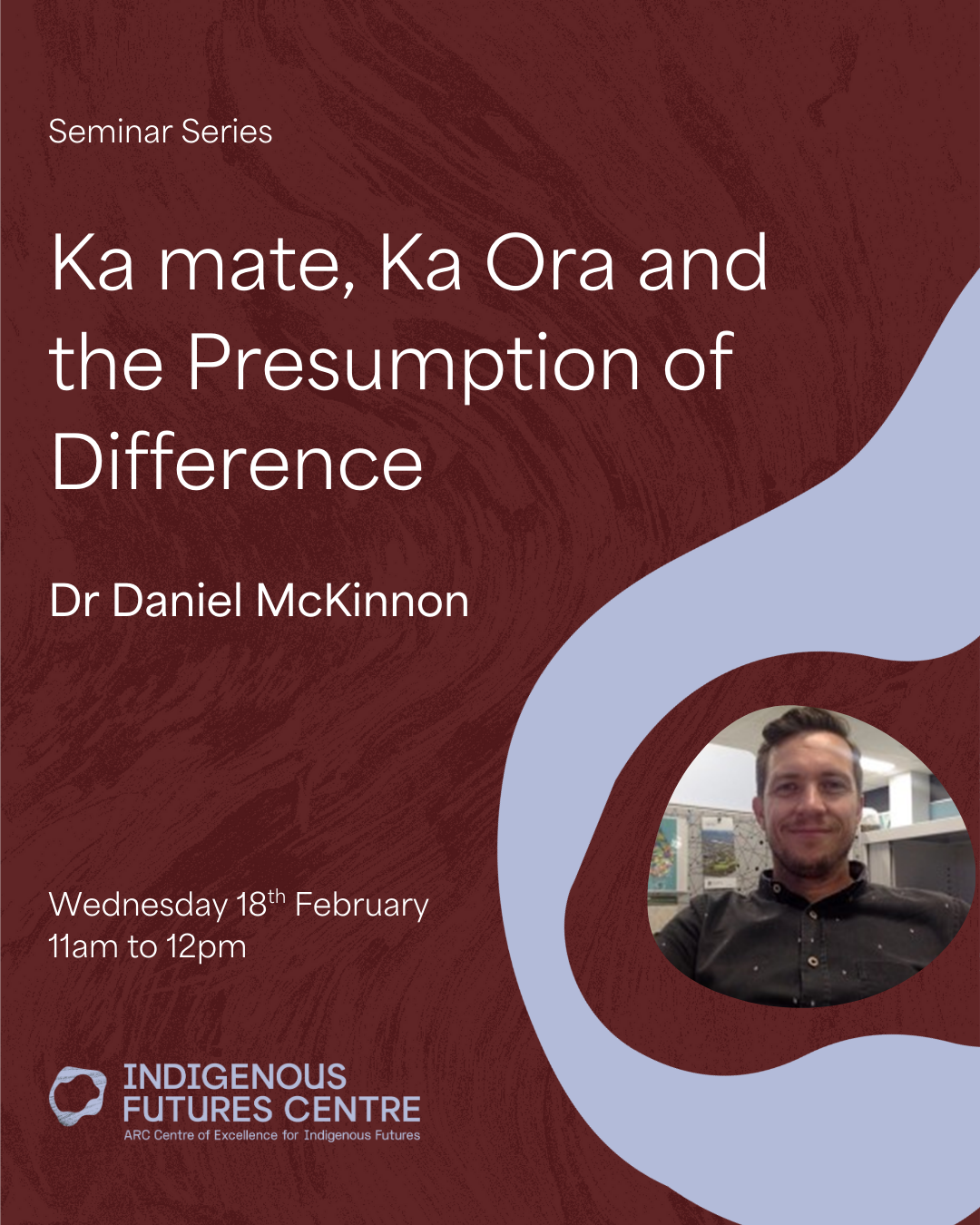
This paper presentation responds to Vanessa Cameron-Lewis and Carl Mika’s (2025) invitation to think about Giles Deleuze’s (1994) notion of “difference” through the Māori concept of whakapapa. While whakapapa is often understood as genealogy, this paper explores it as something much more: a living force that shapes how we understand place, being, and belonging. In many Western traditions, difference is usually defined by categories—who belongs where, who is separate from whom, and what identities people hold. Whakapapa, by contrast, sees all existence as interconnected, emerging together through relationships that include our ancestors, the living world, and more-than-human beings. It is not just a family tree but a way of understanding reality in which life and death are not opposites, but part of one continuous process.
To explore this, the paper draws on American Lithuanian philosopher Alphonso Lingis’s ideas about suffering as something that draws us toward others in moments of grief and loss. Using this alongside Māori relational philosophy, I argue that life should not be understood as something an individual has, but as something continually created and sustained through our relationships with others—human, ancestral, and beyond. In this sense, whakapapa is not only about connection; it is an ongoing activity that keeps life, relation, and continuity in motion. It is a rhythm through which our sense of sovereignty and identity takes shape over time. By bringing together whakapapa, the practice of whakawhanaungatanga (building relationships), and Lingis’s ideas about embodiment, the paper suggests a new way of thinking about “difference”—one that challenges Western assumptions that life and death, or being and relationship, are separate. Instead, these supposed divisions highlight where Indigenous and non-Indigenous ways of understanding the world differ in ways that cannot always be aligned.

